HUMAN INTEREST
After his Nobel win, Karl Deisseroth made time for school lunches
The Stanford scientist shared the 2026 medicine prize for optogenetics. Amid congratulatory calls, he paused to prepare his children’s lunches, according to Associated Press.
By ChikieChikie News
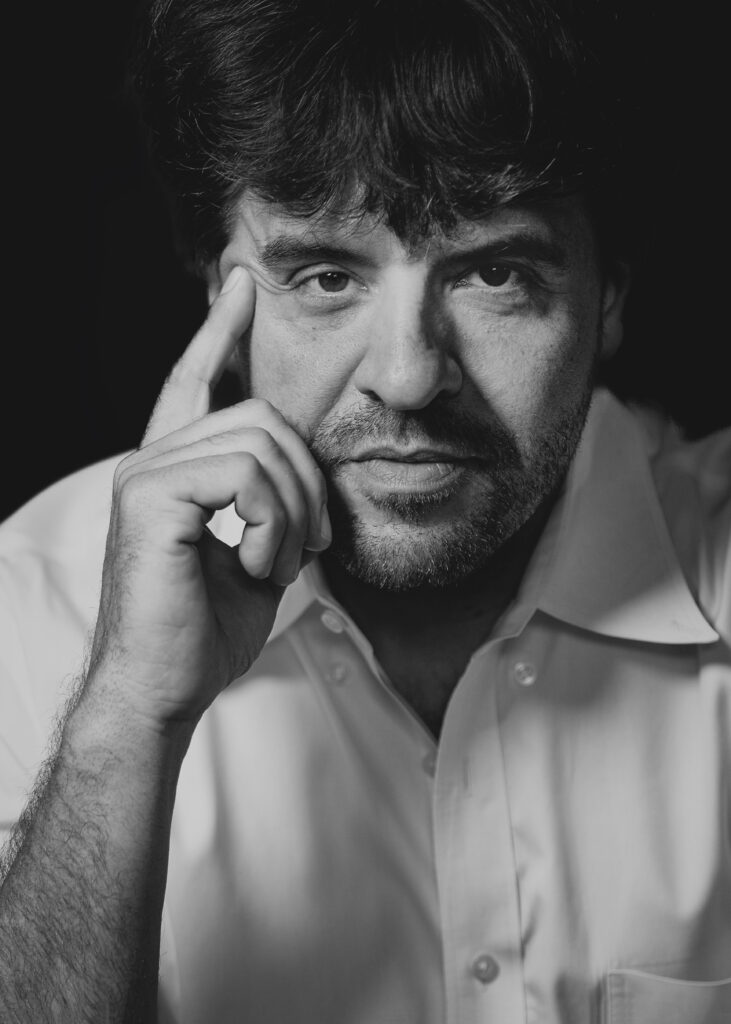

A major announcement, then a familiar task
Karl Deisseroth’s Nobel announcement brought international attention to his home in Stanford, California, on 5 October. It also arrived before his children were awake. After hours of calls, the scientist asked for a break to prepare their school lunches, Associated Press reported.
The ordinary task stood alongside an extraordinary achievement: Deisseroth shared the 2026 Nobel Prize in Physiology or Medicine with Peter Hegemann and Georg Nagel for work that helped establish optogenetics.
Stanford Medicine’s account puts the first Nobel committee call at 12:27 a.m. Pacific time. Deisseroth missed it, and the next call reached his wife, physician-scientist Michelle Monje-Deisseroth. News of the award quickly changed the shape of the family’s night.
The discovery behind the recognition
Optogenetics gives researchers a way to investigate how selected nerve cells contribute to behaviour by controlling their activity with light. Deisseroth is a professor of bioengineering and of psychiatry and behavioral sciences at Stanford; his co-laureates work at universities in Germany.
Stanford’s explanation describes how light-sensitive microbial proteins, called opsins, can be placed on the surfaces of particular neurons. Light pulses can then activate or inhibit those cells, enabling experiments that connect changes in nerve-cell activity to changes in behaviour.
The university describes the method as now used in thousands of laboratories. Its significance is as a research tool that allows precise questions about the brain to be tested. The prize recognises that scientific achievement; it should not be taken as an announcement of a new routine treatment.
Getting the technique to work required more than identifying a light-sensitive protein. Stanford recounts challenges in delivering the relevant genes to nervous tissue and ensuring that the proteins reached the right place on a cell. The eventual success opened a route to experiments that had previously been difficult to perform.
A family’s reaction
At home, the announcement was also a family event. Stanford’s subsequent collection of reactions described pride from his wife, children, mother and colleagues. His daughter Sophie summed up the moment with the words, “Dad, you’ve won all the prizes!”
His son Hudson described him as exceptionally hard-working, while his mother recalled a childhood curiosity about the natural world. These are the family’s reported reflections, rather than independent measures of his character or working life.
Deisseroth’s own response to a question about celebration was to return to his work, pointing to discoveries still to be made and people still to help. The university’s accounts place the award within a continuing scientific career, not its conclusion.
Recognition alongside everyday responsibilities
The lunch-preparation episode comes from AP’s reporting at the family home. It offers a small, concrete glimpse of the morning without requiring speculation about what the children ate or how the rest of their school day unfolded.
A Nobel announcement can turn a scientist into an international headline within minutes. In this case, the attention did not remove an immediate family responsibility. The story’s appeal rests in that juxtaposition: recognition of years of research alongside a task familiar to many parents.
Both parts deserve their proper scale. The award honours a shared scientific advance; the household anecdote shows one moment in the life of one laureate. Keeping those facts together provides a human view of the announcement without embellishing the family’s private life.
Key facts
- Award announced 5 October 2026: Physiology or Medicine.
- Co-laureates: Karl Deisseroth, Peter Hegemann and Georg Nagel.
- AP reported the pause to prepare school lunches; Stanford confirmed the award and family reactions.
Sources and verification
Corrections & updates
Draft prepared on 8 October 2026. Recheck the reporting and sources before publication.
Related stories
Related headline one
Short description.
Related headline two
Short description.